


NBC4 Washington: News, Weather
4.01.01K Reviews
App Specs
- Version
- 8.9
- Updated On
- License
- Free
- Downloads
- 100,000+
- Developer
- NBCUniversal Media, LLC
- Categories
- News & Magazines
- Platform
- Android
Screenshots
 Analysis by AppCompare
When I need to understand what is happening around Washington, D.C. without sorting through a national news feed, I want three things in one place: local reporting, useful weather information, and a quick way to watch the station. That is the problem NBC4 Washington: News, Weather is designed to solve. I found it most useful as a focused local-news companion rather than as an all-purpose news reader.
The app comes from NBCUniversal Media, LLC and sits in the News & Magazines category. It is free to use and rated for Everyone, which makes it an easy recommendation for households that want a straightforward way to follow the Washington area. Its store presence shows a 4.0 average from around 2.9 thousand ratings, with more than 1 thousand written reviews and over 100 thousand installs. Those figures suggest a reasonably established local audience, although they do not replace trying it in your own neighborhood and on your own connection.
From a local concern to a usable answer
My typical starting condition is simple: I hear about a storm, see traffic slowing down, or want to know whether a developing local story affects my plans. A national news app may mention the event, but it usually gives me too much unrelated material and not enough local context. A weather-only app may show conditions but not explain what officials or reporters are saying. This app makes more sense when the question is specifically, “What is happening in the Washington area right now?”
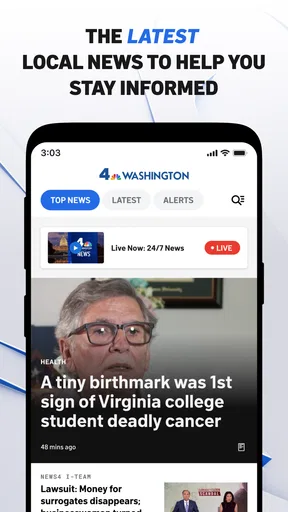
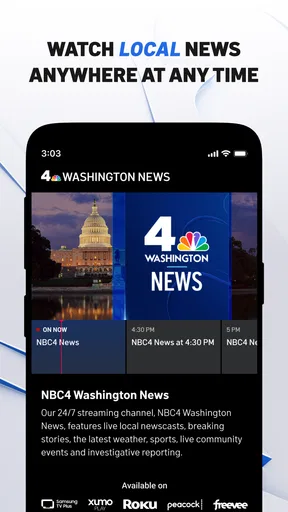
The first thing I noticed is the narrow focus. The app is built around local D.C. news and weather alerts, with access to NBC4 Washington live around the clock. That combination changes how I use it. I am not opening it to browse every major story in the world. I am opening it to check a local situation, watch coverage, or get a quick sense of whether weather could affect my next decision.
That focus is its biggest strength and also its first limitation. If you want international coverage, extensive national analysis, or a broad selection of publishers, a general news app will serve you better. Here, the value comes from locality. The less relevant Washington-area news is to your daily life, the less reason you have to keep this particular app installed.
What I do when time matters
Imagine leaving work in the afternoon and noticing that the sky has changed. Before heading home, I open the app to look for weather alerts and local coverage. I am not looking for a long forecast discussion. I want to know whether the situation is serious enough to change my route, delay an errand, or warn someone at home.
That is a practical use case because the app connects two kinds of information that are often separated. Weather information tells me about the condition, while local news can provide the surrounding context. If a weather event is affecting roads, schools, public activity, or neighborhoods, a local station is often more useful than a generic forecast screen alone.
Worth Reading Before You Choose

EA SPORTS FC Mobile 26 Is a Bigger Football Game, but It Takes Time

Flipboard Shows What News Apps Must Do Beyond the Feed

Switching to Android Auto Means Rethinking Your Driving Routine

Google Calendar Makes a Crowded Week Easier to Manage

Ludo King Makes the Most of the Minutes Between Plans

Baby Panda World Brings Quick Play to Modern Phones, but Its Game Library Feels Busy
I also like the app for the opposite situation: when nothing dramatic is happening. A quick check can help me stay aware of local developments without committing to a long television broadcast or a large social-media feed. The app is most comfortable in these short sessions, where I need a current local snapshot and then want to get on with my day.
The step-by-step flow I found most useful
I start with the local news area when I want to understand the event itself. I look for the main story, scan the surrounding items, and decide whether the information affects me directly. This is a better workflow than opening random notifications or relying on a headline shared by someone else, because the story and the station’s weather coverage are available within the same local-news environment.
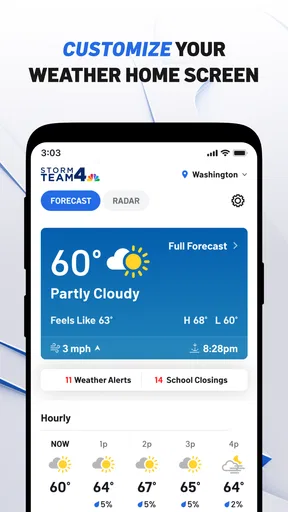
Next, I move to the weather information when the story involves conditions outside. This handoff matters. A headline may tell me that severe weather is developing, but the weather section helps me think about timing and immediate impact. I use the two views for different decisions instead of treating either one as a complete replacement for the other.
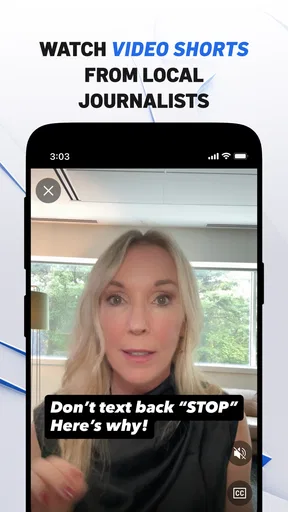
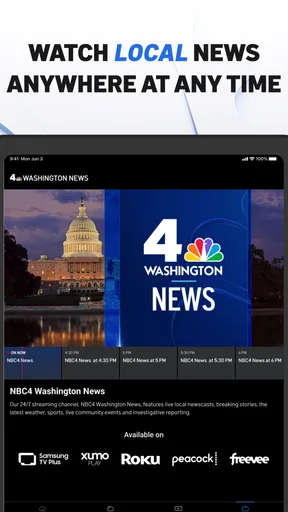
When I need more than a written update, I turn to the live NBC4 Washington stream. The live option is especially useful when a situation is changing quickly and I would rather watch the station’s ongoing coverage than repeatedly refresh individual stories. It also gives the app a different role from a standard text-based news reader: it can become a direct viewing point for local broadcast coverage.
There is a trade-off here. Live video depends more heavily on a reliable connection than reading a short article or checking an alert. If I am on a weak mobile signal, the written information may be the more practical first step. I would not wait for a video stream to load before making a time-sensitive decision when a concise alert already gives me the essential warning.
My preferred sequence is therefore: check the local headline, review the weather alert, then watch live coverage if the situation deserves more context. That order prevents the live stream from becoming a time sink and keeps the app useful even when I only have a minute.
How the information moves between people and screens
The most important handoff is from the app to the user’s real-world decision. A weather alert is not the decision itself. I still need to compare it with my location, travel plans, and the advice of local authorities. The app can help me notice a developing issue, but I should not treat a news feed as personal emergency guidance.
A second handoff happens inside a household. I might check the app first, then tell a family member that local conditions could affect a pickup or evening plan. The app works well as a shared reference because it gives us a local news source rather than forcing everyone to interpret separate social posts. For this kind of use, the clearest benefit is not simply speed; it is having one recognizable place to begin the conversation.
There is also a handoff between written reporting and live coverage. Written news is better when I need to scan, compare, or return to a detail. Live video is better when I want the station’s continuing presentation of a developing event. Switching between them is useful, but I would not assume that one format always contains everything in the other. I treat the live stream as an additional way to follow coverage, not as a reason to ignore the written update.
That distinction is important for accessibility and convenience. Someone in a quiet office, on public transport, or in a place where video is impractical may prefer text and alerts. Someone at home during a fast-moving event may appreciate the live broadcast. The app’s usefulness changes with the setting, so I would choose the format based on the moment rather than forcing one workflow every time.
Where it fits beside familiar alternatives
Compared with a general news aggregator, this app feels less distracting. An aggregator is better when I want several viewpoints, national headlines, business coverage, or international reporting. The NBC4 app is better when my question begins with a place: Washington, D.C. and the surrounding local audience.
Compared with a dedicated weather app, it offers more editorial context. A weather app may be faster for checking a temperature or a forecast, while this one is more useful when weather becomes a local story. If I only want a simple glance at conditions every morning, a weather-first tool may be more efficient. If I want to understand how conditions connect to local events, the NBC4 approach has the advantage.
Compared with watching television, the app is more flexible for short checks. I do not need to wait for a scheduled segment to learn whether there is a local update, and I can choose between reading and live viewing. Television may still be more comfortable for a longer, relaxed viewing session, especially on a large screen. The app is strongest when I want control over when I check and how much time I spend.
Compared with social media, the app gives me a more deliberate starting point. Social feeds can surface eyewitness information quickly, but they can also mix speculation, repetition, and unrelated reactions. I prefer using this app to establish the basic local picture before deciding whether a social post adds anything useful.
Small habits that make the app more practical
My first tip is to separate “I need to know” from “I want to watch.” If I am checking whether plans should change, I begin with news and weather information. I use the live stream only after that. This keeps video from slowing down a quick decision and makes the app useful even during a short break.
My second tip is to read an alert in context. A warning can be important without applying equally to every neighborhood or every part of a journey. I use the local information as a prompt to investigate the route and timing that matter to me. That extra step is more responsible than assuming a broad local alert describes my exact street.
My third tip is to use the app as a verification point when a local claim starts elsewhere. If someone sends me a dramatic message about conditions or an incident, I check the station’s coverage before passing it on. This does not make any single source infallible, but it gives me a more grounded first check than repeating an unverified post.
A fourth useful habit is to decide in advance whether I need background or immediacy. For background, I prefer the written story because I can move at my own pace. For immediacy, I choose live coverage when the event is unfolding and the connection is strong. Making that choice deliberately reduces the common frustration of opening a video when all I needed was one clear update.
What the app does well in everyday use
The strongest result is convenience with a local purpose. I can move from a neighborhood story to weather information and then to live station coverage without changing to a completely different service. That makes the app particularly suitable for residents, commuters, families, and anyone whose plans depend on what is happening around Washington.
The free price also lowers the barrier to trying it. I do not have to make a subscription decision before finding out whether the local focus fits my routine. The Everyone age rating makes it appropriate for a broad household audience, although adults should still help younger users understand that alerts and news reports are information to interpret, not instructions for every situation.
The app’s current version is 8.9, and it supports operating systems starting with version 9. For someone with a compatible device, that makes the technical entry point relatively approachable. I would still check the device’s available space, connection quality, and system compatibility before relying on it during an important event, since a local-news app is only helpful when it opens and updates when needed.
The app has been available since April 2, 2012, which gives it a long presence compared with a newly launched local-news experiment. I see that history as a reason to consider it a familiar station companion, not as a guarantee that every individual update will feel perfect on every phone. The experience still depends on the device, network, and the way I choose to consume the information.
Where the workflow breaks down
The first weak point is scope. Someone outside the Washington area may find the content too narrow, while someone seeking a complete daily news briefing may feel that important nonlocal subjects are missing. This is not the app I would choose as my only news source. I would pair it with a broader service if I needed national and international coverage.
The second weak point is the difference between an alert and a full explanation. Alerts are valuable because they draw attention quickly, but they can make a situation feel complete before I have read the surrounding details. I have to open the related coverage and judge what action, if any, is appropriate. Users who want every notification to include a complete summary may find that workflow less satisfying.
The live stream can also be the wrong choice when I am short on data, battery, or patience. Video naturally asks more from the connection than a quick text check. If I am traveling, I would use the written information first and save live viewing for a stable connection. This is a practical limitation, not a reason to dismiss the feature.
Another point of friction is attention. Local news can be genuinely useful, but repeatedly checking developing stories can turn into a cycle of refreshing without gaining much new information. I get more value when I open the app with a question—weather risk, travel impact, or a specific local event—instead of browsing without a purpose.
Finally, users who prefer a highly personalized feed may find the local-station structure less flexible than an aggregator. The benefit is editorial focus; the cost is fewer ways to reshape the entire news experience around unrelated interests. I would choose this app for local relevance, not for deep customization across every subject.
Who should install it
I would recommend it to anyone who lives in or regularly travels through the Washington area and wants a direct local source for news, weather alerts, and live station coverage. It is especially useful for commuters, parents coordinating changing plans, residents monitoring severe weather, and viewers who want access to NBC4 Washington without arranging their day around television schedules.
I would be more cautious about recommending it to someone who wants a single app for everything. If your priority is a broad national briefing, a specialized weather dashboard, or a multi-source comparison of major stories, another category of app will be a better match. This one earns its place through local focus, not breadth.
After using it as a starting point for local decisions, I see NBC4 Washington: News, Weather as a practical companion rather than a complete replacement for every other information source. Its best workflow is clear: begin with the local report, use weather alerts to understand urgency, switch to live coverage when the story is moving quickly, and then apply that information to your own situation.
My final recommendation is positive for the right audience. The free access, broad age rating, established presence, and combination of local reporting with live viewing make it easy to try. Just keep its limits in mind: it is geographically focused, video may not suit every connection, and alerts still require judgment. If Washington-area news and weather are part of your daily routine, I think this app is worth keeping close at hand.
Pros
- Fast access to breaking news from the Washington
- D.C. area.
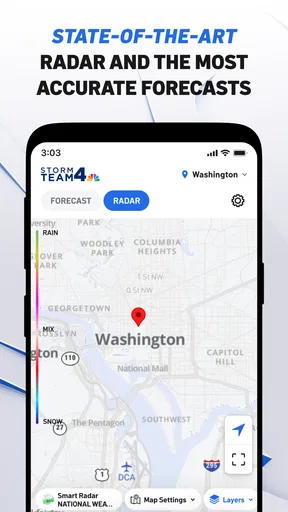
- Detailed local weather forecasts
- radar
- and severe weather alerts.
- Live newscasts help users follow major stories as they develop.
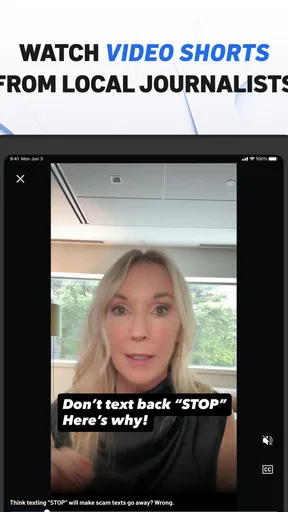
- Video reports provide useful context beyond short news headlines.
- Customizable alerts make it easier to track topics that matter most.
Cons
- Some content may require a strong internet connection to load smoothly.
- Frequent notifications can feel excessive unless carefully customized.
- Advertising may interrupt browsing and reduce the viewing experience.
- Coverage is focused mainly on Washington
- D.C.
- Maryland
- and Virginia.
- Certain live or on-demand videos may have regional availability limits.
FAQs for NBC4 Washington: News, Weather
What is NBC4 Washington: News, Weather?
NBC4 Washington: News, Weather is the official mobile app for NBC4 WRC-TV, serving Washington, D.C., Maryland, and Virginia. It provides local and national news coverage, breaking-news alerts, weather forecasts, radar maps, live updates, traffic information, and video reports. The app is designed for users who want quick access to regional headlines and reliable weather information while traveling or at home.
Does the NBC4 Washington app provide accurate local weather forecasts?
The app includes current conditions, hourly and extended forecasts, interactive radar, severe-weather information, and location-based updates for the Washington metropolitan area. Users can save multiple locations and receive alerts for important weather developments. Forecast accuracy can naturally vary because weather conditions change, but the information is supplied through NBC4’s weather team and is particularly useful for local planning.
Can I receive breaking-news and severe-weather notifications?
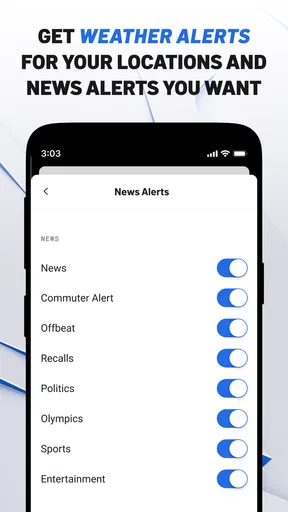
Yes, the app supports push notifications for breaking news, major local stories, severe-weather warnings, school or community updates, and other important developments. During setup, you can usually choose whether to allow notifications and manage permissions later through the app or your device settings. If you prefer fewer interruptions, notification categories can generally be adjusted to keep only the alerts you consider important.
Does NBC4 Washington: News, Weather offer live video or streaming?
The application may provide live news coverage, video reports, press conferences, and other streaming content when available. Access to certain live broadcasts can depend on your location, broadcast schedule, internet connection, and television-provider or platform requirements. Video quality may also change automatically according to network speed. A stable Wi-Fi or mobile-data connection is recommended, especially when watching extended live coverage.
Is the NBC4 Washington app free to download and use?
NBC4 Washington: News, Weather is generally free to download, and many of its news articles, forecasts, alerts, and videos can be accessed without a subscription. However, mobile-data charges may apply when using cellular networks, particularly for video or live streaming. Some content or features may vary by region, device, licensing conditions, or updates to the application, so users should review the store listing before installing.


